
What's wrong with Avery?
In the following game you’ll meet Avery, a teenager living in a majority-Black neighborhood. Avery is 15 years old, and plays on his school’s basketball team. As the season ramps up, Avery has noticed a few physical health problems. His asthma has gotten worse, affecting his endurance and ability to stay on the court the whole game.
In this course, we’ll play a game to rebuild Avery’s environment and see how it affects his health. Click the game below to begin playing
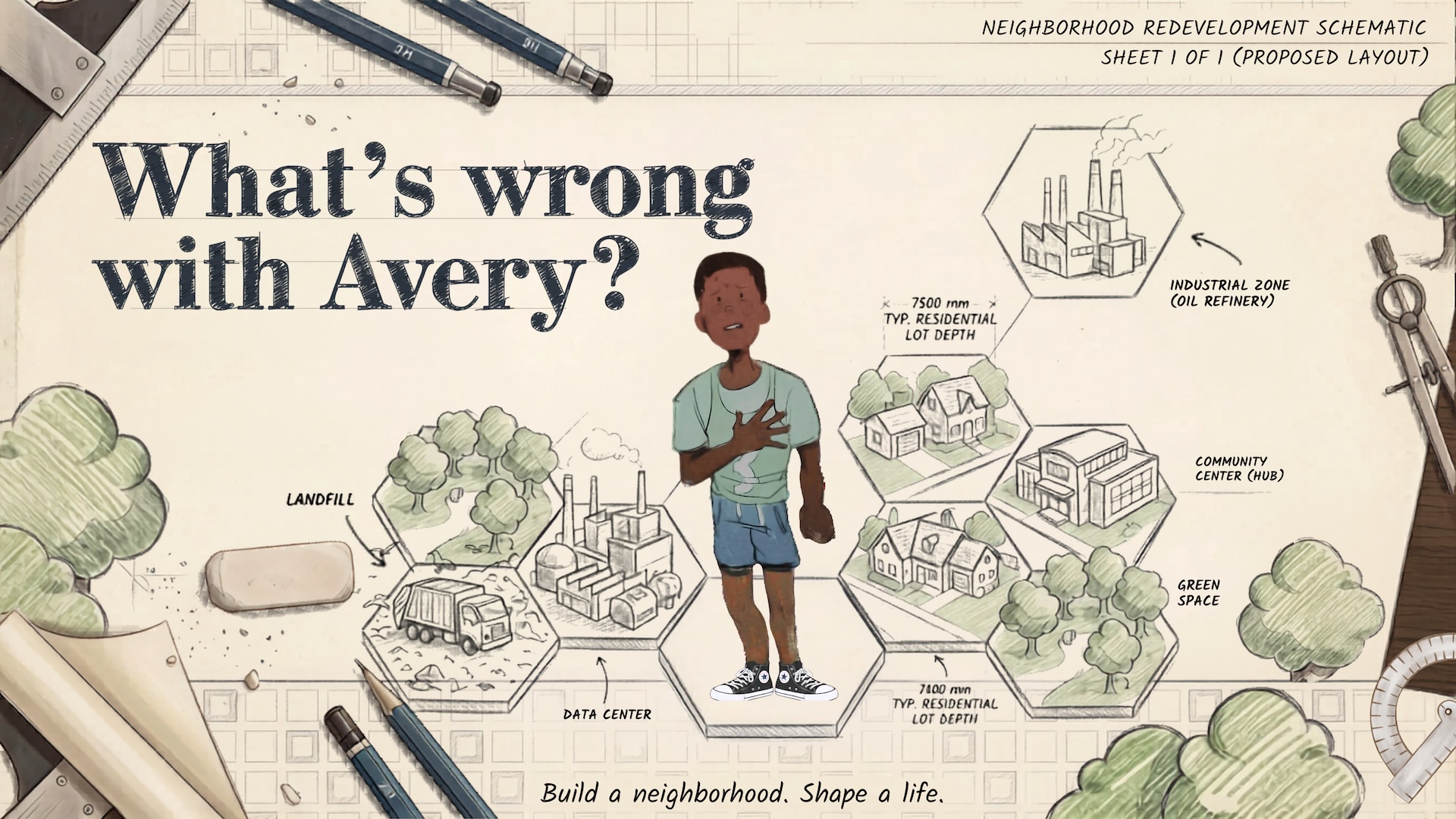
The places we live, work and play affect our health. In this game, you saw how Avery’s energy, respiratory health, and focus were changed by the built environment around him. In levels two and three, you encountered systemic disparities, or differences between which neighborhoods have nearby amenities (like parks and grocery stores) and which neighborhoods have more disameneties (like factories and landfills). Systemic disparities are often driven by racism and classism, and can be made worse by factors like natural disasters. Neighborhoods facing systemic disparities often want better access to ameneties like parks and community centers, but are restricted by limited budgets, government policy, and corporate interests.
To try other courses, return to the courses homepage.